Kitchen and stewarding
Manage daily station use and the tray workflow together.
FROM STATION TO REVIEW
Review kitchen tray, camera and scale records together. Understand which dishes and services contribute to food loss.
A CLOSER LOOK AT THE PRODUCT
Review waste records with images, dish matches, weight sources and service information. Keep the context clear enough for your team to assess.
Bring tray and weight records together at a kitchen camera and full-size platform scale station.
Review images, product matches and weights together. Leave uncertain results for your team to check.
Review waste in the context of dishes and services, then revisit preparation quantities.
THE WORKFLOW, STEP BY STEP
Plan how records will be reviewed alongside the physical station. Define your team’s responsibilities from the start.
Review kitchen flow and the route trays take. Plan the camera, full-size platform scale and waste container around the actual workflow.
Consider images and weight sources in service context. Keep the process behind a record visible.
Review dish recognition, quantities and uncertain results. Support record reliability through team assessment.
Assess records by dish and service. Consider preparation quantities, service format and menu decisions together.
EXPLORE AN EXAMPLE
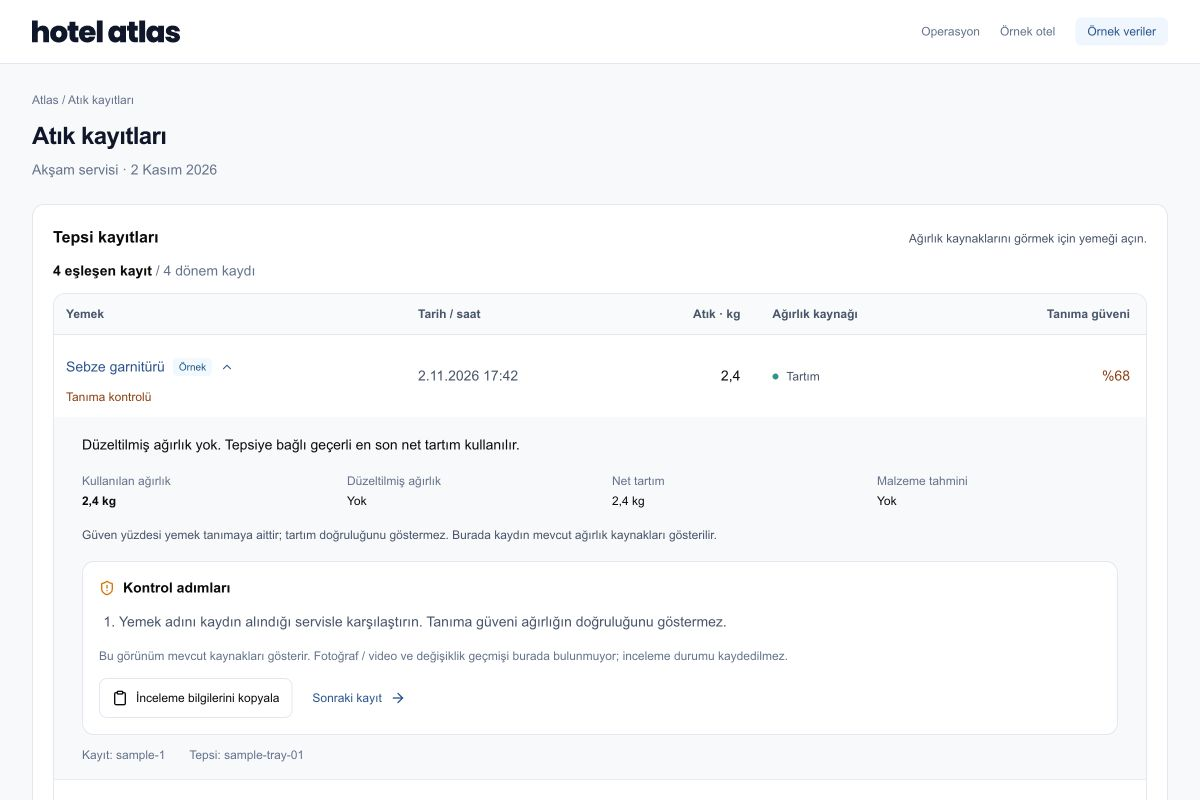
Quantity alone does not explain food loss. Explore the relationship between image, weight and service context in this sample record.
ILLUSTRATIVE REVIEW · SAMPLE DATA
The sample vegetable garnish match is awaiting review. Assess the image and dish name together.
This interaction explains the review approach. It does not create or change an operational record.
GETTING STARTED AT YOUR HOTEL
In the first discussion, we review your kitchen layout and who will assess the records.
Teams sharing the workflow
Manage daily station use and the tray workflow together.
Reviews dish matches and records and determines preparation changes.
Review food loss by service in the same context as the kitchen team.
BEFORE YOU BEGIN
Let’s define the scope around your hotel’s workflow.
You can start with menus, recipes, stock and cost workflows. Image-and-weight-based waste measurement requires a separate assessment of the station and equipment.
Uncertain matches are part of team review. Images, dishes and weight records are considered together; system output alone is not treated as a final record.
Scope depends on space and your workflow. We assess station position, scale use, networking and team movement in the initial review.
Records provide context for preparation and menu review. Changes depend on service conditions, the guest experience and your kitchen team’s assessment.
Management & Profitability
Review menu cost, stock and waste together. Clarify what the team should check and what comes next.
SEE ATLAS IN YOUR OWN SERVICE
Start with a sample menu, expected guest count and your team’s priorities.
Request a demo